
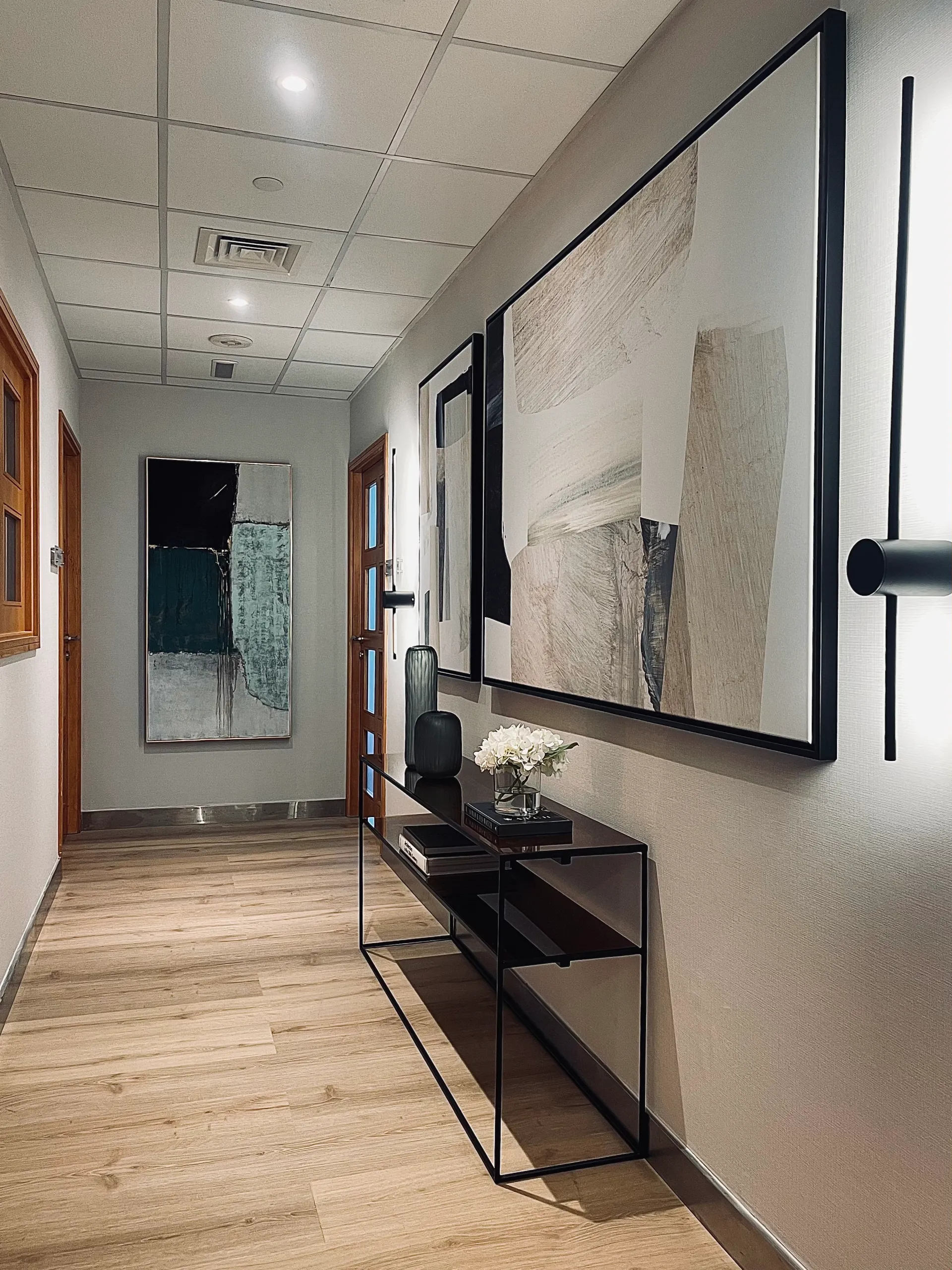
Distinctive interiors gain their character from details that deserve a close look. Fine arches, rich wall panels, elegant ceilings, crafted doors, and refined trims give rooms a strong visual identity. These features connect beauty with function while adding depth to each space. When every element supports the overall concept, the room feels polished and complete. This level of refinement defines Dubai luxury interior design and gives each interior its own signature.
Elegant wall treatments
Wall treatments set the tone for an upscale interior. Fluted panels, decorative molding, textured finishes, stone surfaces, and custom joinery add visual interest without making the room appear crowded. Designers select finishes that suit the room’s size, lighting, and furniture. A well designed wall often serves as a striking backdrop for artwork, mirrors, or statement furniture.
Refined ceiling details
Ceilings receive plenty of focus in high-end interiors. Coffered patterns, recessed sections, sculpted borders, and layered lighting give the upper part of a room strong character. A detailed ceiling draws the eye upward and adds a sense of height. Soft lighting within recessed areas also gives the room a warm and inviting atmosphere.
Distinctive doors and openings
Doors, arches, and room openings add personality to an interior. Tall doors with custom panels offer an impressive entrance, while curved arches soften sharp architectural lines. Glass partitions also help connect spaces while keeping each area visually distinct. Designers select proportions and finishes that match the architectural style of the property.
Custom millwork and joinery
Custom woodwork adds precision and character to luxury spaces. Built in shelving, paneled walls, cabinetry, and decorative screens give interiors a tailored appearance. Skilled craftsmen work with exact measurements so each piece fits naturally into its setting. Fine hardware, quality timber, and subtle detailing give these features an exclusive finish.
Stone and metal accents
Stone and metal introduce texture and contrast. Marble surrounds, stone flooring, brass trims, bronze details, and sculptural metalwork add richness to rooms. Designers balance these materials with softer fabrics and natural wood to prevent the space from appearing cold. Small architectural accents also provide visual links between separate areas.
Proportion and visual balance
Strong architectural design relies on proportion. Large rooms suit taller doors, broader moldings, and larger decorative features, while compact rooms benefit from finer details. Designers study spacing between architectural elements so the interior looks balanced from every viewpoint. Consistent proportions also help furniture, lighting, artwork, and accessories sit comfortably within the room.